Insights
/
feb 16, 2025
AI Agent for Social Media: What It Can (and Can't) Do
An AI agent can draft, schedule, and monitor your social media. It can't replace your strategy or handle a crisis. See exactly where the line sits.
/
AUTHOR

Gracia Perkin

A scheduling tool with a caption generator bolted on now calls itself an AI agent. So does a chatbot with a content calendar attached. The term has been stretched so far that it barely means anything specific anymore, which makes it genuinely hard to know what you're actually getting when a product page uses it.
At ZeluAI, we think the honest way to cut through this is to draw a clear line: does the system take action on its own, or does it just help a person type faster? Everything else follows from that one distinction.
What Actually Counts as an "AI Agent" for Social Media?
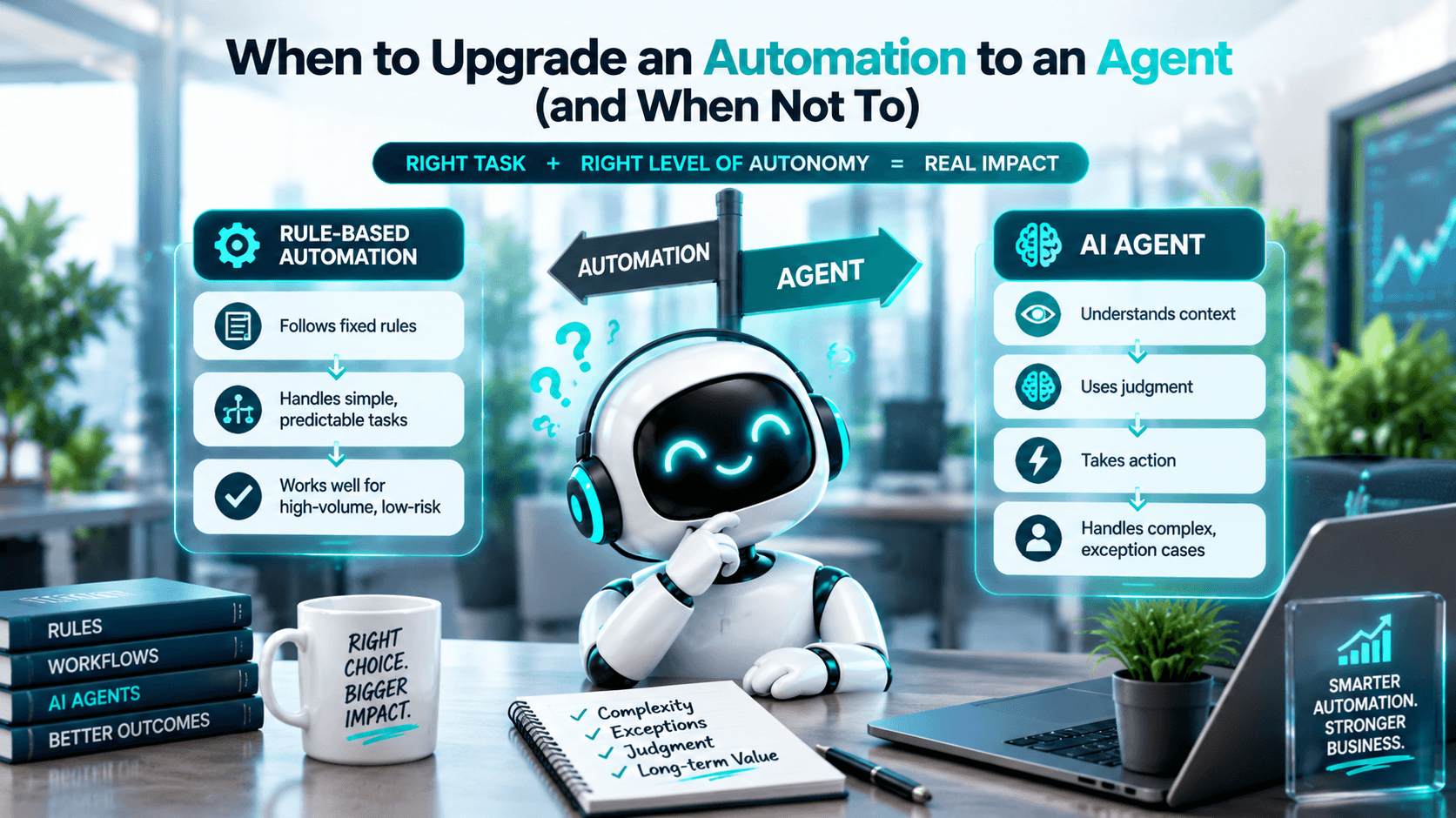
A real AI agent for social media takes action without being told exactly what to do at every step. It's not software that helps write a caption when you click generate, and it's not a tool that suggests a posting time when you hover over a calendar slot. Those are assistants, not agents, even when the marketing copy says otherwise.
A genuine agent perceives what's happening across platforms, brand mentions, comments, analytics, reasons about what response or action fits the situation, and then acts, drafting, scheduling, routing, or escalating, all without someone directing each individual step.
This same reasoning-versus-scripting distinction is what we cover from the phone side in AI voice agents vs virtual assistants, and it holds true here just as much.
How Does an AI Agent Actually Handle Content and Scheduling?
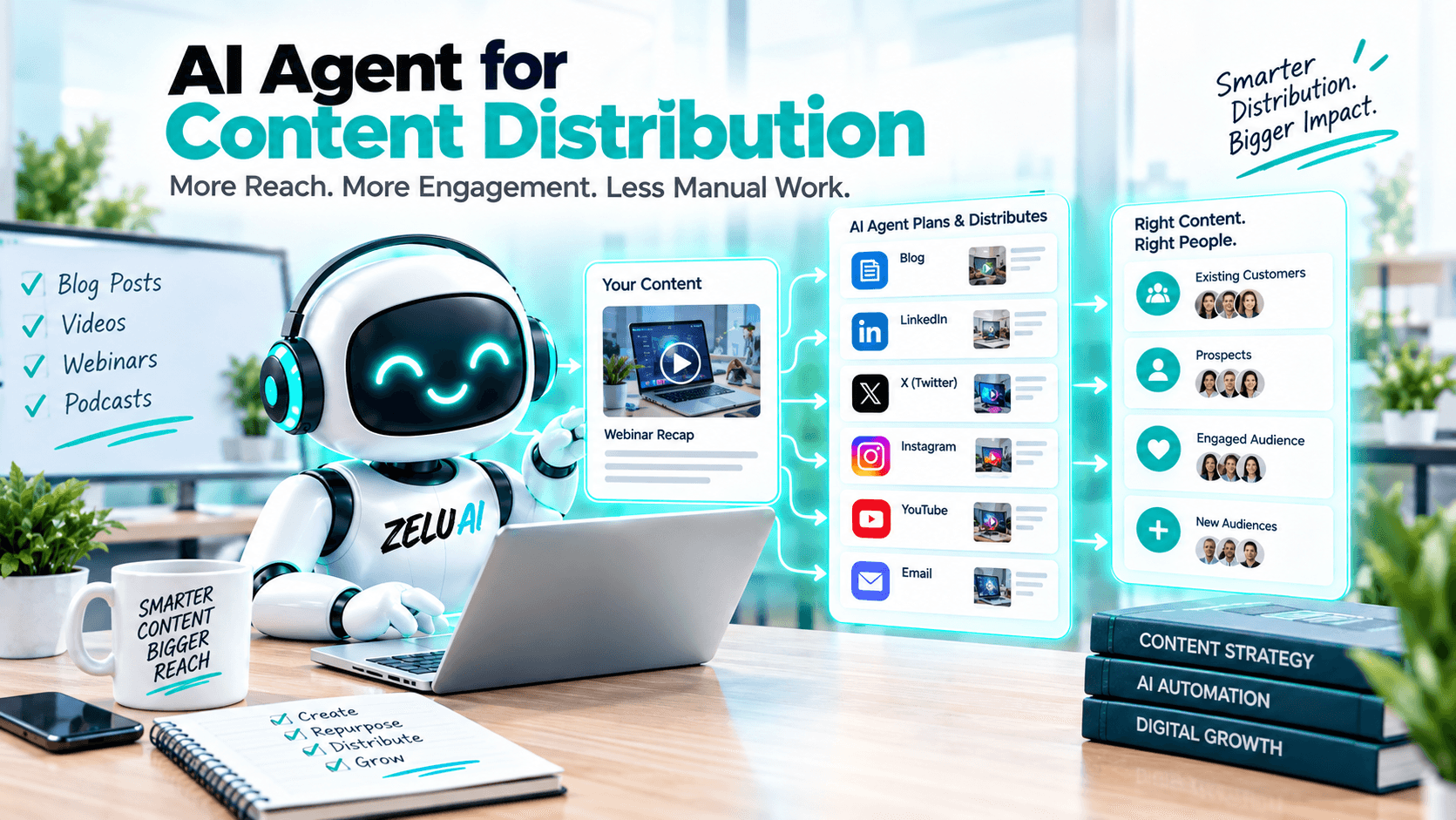
An AI agent handles content and scheduling by generating platform-specific posts, understanding that a caption built for LinkedIn shouldn't read the same as one built for Instagram, then queuing and publishing at the times that actually perform best for each account.
This isn't a single generic post copied everywhere, it's tailored output built for how each platform actually gets used, the same kind of tailored, purpose-built approach behind the custom AI agents we build at ZeluAI.
Can It Actually Post Without Someone Clicking "Publish"?
Yes, a genuine agent can publish directly once it's been given that permission, rather than only preparing a draft for someone else to send. Whether a business actually wants that level of autonomy is a separate question, but the capability itself is real, not marketing language.
How Does It Monitor and Respond to What's Happening in Real Time?
An AI agent monitors brand mentions, sentiment, and comments continuously, then either responds automatically or queues a reply for review, depending on how much trust it's been given. This goes beyond a notification telling a person to go check something, the agent actually reads and interprets what's being said.
Some systems go a step further, testing how a planned post might land with a simulated audience before it ever goes live, catching a message that could land badly before it becomes a real problem rather than after.
What Can't an AI Agent Do Yet?
This is worth being direct about. An AI agent handles execution well, drafting, scheduling, monitoring, but it cannot replace genuine strategy, community management, crisis response, or creative direction. Fully autonomous social media, with no person involved anywhere in the loop, isn't a real, working thing yet, no matter how confidently a product page might suggest otherwise.
The businesses that get burned here are the ones that assume execution capability means judgment capability. A system that drafts a technically correct reply to an angry customer still doesn't know whether that reply is the right call for that specific relationship, that specific moment, or that specific brand's reputation.
How Does It Know When to Stop and Ask for a Human?
A well-built agent runs on stop rules, specific conditions that pause it and route the situation to a person instead of letting it proceed on its own. A sensitive complaint, an account in an unclear state, a request that falls outside its approved scope, these are the moments a genuinely well-designed system recognizes and hands off, rather than confidently pushing forward anyway.
This matters more than almost any other single design choice, since an agent that doesn't know its own limits is more dangerous than one that's simply less capable.
Which Businesses Actually Benefit Most From This?
Agencies managing multiple client accounts, e-commerce teams running campaigns across several platforms at once, and support teams triaging a steady stream of comments and DMs tend to benefit the most, since the volume and repetition genuinely justify the setup.
This overlaps closely with the same volume-driven logic behind AI lead generation for small business, where automation earns its place once the workload is genuinely repetitive, not before. A solo creator posting from one phone, or a team without any clear approval process in place, usually doesn't need this level of system, and adding one just introduces complexity without a real payoff.
Is This Actually Autonomous, or Still Human-Supervised?
Right now, it's still human-supervised, and that's not a limitation to apologize for, it's the responsible way this technology should actually work today. The strongest systems propose an action and let a person approve it, particularly for anything touching brand reputation, rather than acting entirely alone the moment something happens.
How Should a Business Get Started?
The clearest starting point is picking one narrow, repetitive part of the workload, scheduling, or first-pass drafting of routine comment replies, and letting an agent handle just that piece while a person still reviews anything that touches strategy or reputation.
Expanding scope should follow proven reliability, not the other way around. You can see the fuller range of what we build on our services page.
Final Thoughts
An AI agent for social media is genuinely capable of handling the repetitive execution work, drafting, scheduling, monitoring, that used to consume hours every week. What it can't do is replace the judgment behind a brand's voice, the instinct needed during an actual crisis, or the creative direction that makes content worth posting in the first place.
Businesses that get real value here are the ones that scope the agent's role honestly from the start, rather than assuming more autonomy is automatically better. Knowing exactly where that line sits is worth more than any feature list.
Frequently Asked Questions
Can AI agents actually post on social media, or just draft content?
Genuine agents can publish directly once given permission, though many businesses choose to keep a review step in place regardless of the technical capability.
Is there an AI that can run an entire social media account with no oversight?
Not reliably, current systems still work best with a person reviewing anything that touches strategy, reputation, or a genuinely sensitive situation.
Does an AI agent work the same way across every platform?
No, platform support and capability vary significantly, and some tools that claim broad support break when a platform's interface changes.
Can a business use an AI agent for some platforms and handle others manually?
Yes, this is a common and reasonable approach, especially while a business is still building trust in how the system performs.
What happens if an AI agent drafts a response to a genuinely angry customer comment?
A well-built system flags this for human review rather than sending it automatically, since this is exactly the kind of situation that needs a person's judgment.