رؤى
/
16 فبراير 2025
What Is an AI Receptionist? How It Actually Works
An AI receptionist does more than answer the phone. See how it actually decides what to do with a call, and where a human still needs to step in.
/
مؤلف

غرايسيا بيركين

A phone rings after hours. No voicemail, no missed call, no waiting until morning. Something picks up, understands what the caller needs, and actually does something about it before the conversation ends, rather than just noting down a message for someone to return the next day.
That's the short version of what an AI receptionist is. At ZeluAI, we build the voice agents behind exactly this kind of setup, and the most useful way to understand the technology is to look past "it answers the phone" and into what happens in the seconds after.
What Is an AI Receptionist?
An AI receptionist is software that answers incoming business calls, understands what the caller is asking for using natural language processing (NLP), and takes an action in response, rather than just recording a message. That action might be answering a question, booking an appointment, or routing the caller to the right person.
The distinction that matters most is between answering and acting. A system that only picks up and takes a message is a more polished voicemail. One that actually resolves the caller's request during the call is doing something categorically different, and that difference is where most of the real value sits.
How Is This Different From a Phone Tree or Voicemail?
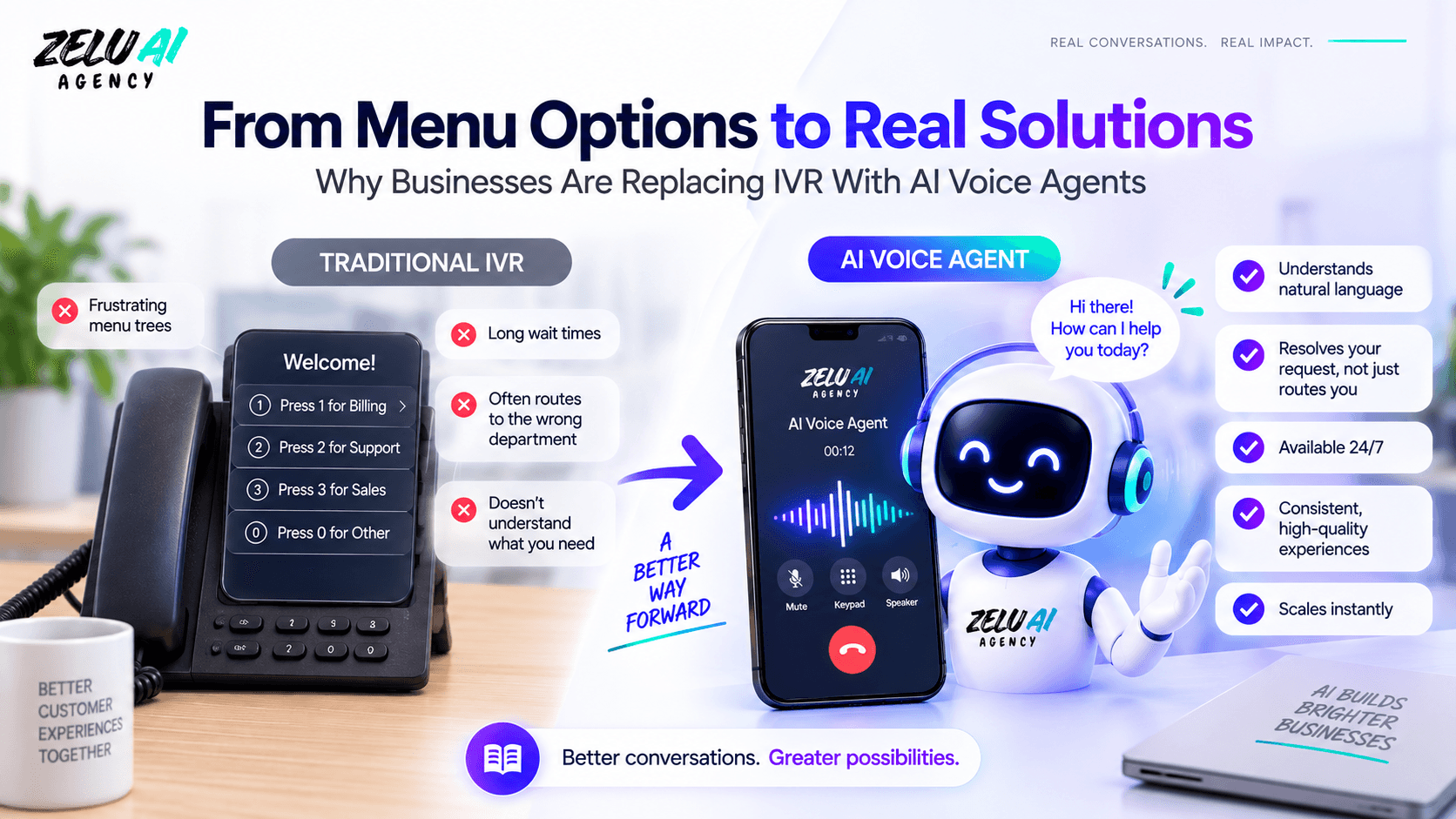
A phone tree works off a fixed menu: press 1 for this, press 2 for that. It can't handle a request that doesn't fit neatly into one of its branches, and callers routinely hang up rather than navigate it. Voicemail doesn't even attempt a conversation, it just waits.
An AI receptionist listens to natural speech and interprets intent directly, without the caller needing to know which button corresponds to their request. Someone can say "I need to reschedule Tuesday's appointment" in their own words, and the system understands that request the same way a person would, rather than requiring it to match a pre-programmed keyword.
How Does an AI Receptionist Actually Work?
Underneath the conversation, a few components work together in real time. Speech recognition converts the caller's spoken words into text, natural language processing interprets what that text actually means, and a response layer generates the reply the caller hears, all within a fraction of a second.
We break this same stack down in more depth in our guide to how AI voice agents work, since a receptionist is really just one application of this underlying technology. What ties these pieces together is a decision layer sitting on top of the conversation itself, deciding what to actually do with the request once it's understood.
How Does It Decide What Action to Take?
Once intent is understood, a decision engine determines the next step: answer the question directly from a knowledge base, check a calendar and book an appointment, route the call to a specific person, or escalate to a human when the request falls outside what the system is built to handle. This decision-making layer is what separates a real AI receptionist from a system that can only recite scripted responses.
What Can an AI Receptionist Actually Handle?
The strongest use cases are structured and high-volume: answering frequently asked questions, booking or rescheduling appointments, capturing lead information, and handling multiple calls simultaneously during busy periods when a human team simply can't keep up.
These are tasks with clear, predictable steps, which is exactly where this kind of system performs best.
What Happens When a Call Needs a Human?
Not every call fits the pattern. A complicated complaint, an emotional situation, or a request that requires judgment rather than a lookup should be handed off, not forced through a script. A well-built system recognizes when it's reached its limit and transfers the call along with a summary, so the caller doesn't have to explain their situation twice.
How Does It Connect to the Tools a Business Already Uses?
The most overlooked part of this technology is what happens after the call ends. A system that just answers and disconnects still leaves someone to manually enter the details afterward.
A system that syncs directly with a CRM logs the caller, updates the record, and triggers a follow-up automatically, which is the difference between a nicer voicemail and a front desk that actually keeps the business's data current.
Does It Replace Front-Desk Staff, or Work Alongside Them?
In most businesses, it works alongside people rather than instead of them. The system picks up the repetitive, high-volume calls, the FAQs, the after-hours overflow, the simple bookings, freeing staff to focus on the calls that actually need a person's judgment or a personal touch.
This mirrors the same pattern we've discussed in rule-based automation vs agentic AI: the predictable, structured work gets automated, while judgment-heavy work stays with people, and the two are meant to work together rather than compete.
What Should a Business Expect During Setup?
Most modern systems start by learning from information a business already has, its website, FAQs, business hours, and service details, which shortens the setup considerably compared to training a system from a blank slate.
From there, a business typically reviews and adjusts greetings, routing rules, and appointment logic before going live, refining anything that doesn't quite match how the business actually operates.
The stronger approach is starting narrow: turning the system on for after-hours calls first, or for one specific type of request, before expanding it to handle everything. Businesses that try to automate every call type on day one tend to spend more time fixing edge cases than they would have by rolling out gradually and expanding once the first use case is working well.
How Should a Business Decide If It's Ready for One?
The clearest signal is call volume relative to available staff. A business missing calls regularly, especially after hours or during peak times, is already losing the exact conversations this technology is built to catch. A business with low call volume and no coverage gaps may not need one yet.
At ZeluAI, we build AI voice agents designed around this exact kind of call-handling need, matching what gets automated to what a business's calls actually require rather than defaulting to the most complex setup available. You can see the range of what these systems can be built to do on our services page.
Final Thoughts
An AI receptionist is more than a voice that answers the phone. The real value sits in what happens after the greeting: whether the system can actually understand a request, decide what to do with it, and either resolve it or hand it off cleanly to a person.
Businesses that start with a clear picture of where their calls are actually getting missed, rather than trying to automate everything at once, tend to get the most reliable results. If you're weighing whether this fits your business, understanding what the system can genuinely handle is a better starting point than any feature list.
Frequently Asked Questions
Can an AI receptionist handle multiple calls at the same time?
Yes, unlike a single staff member, it can hold separate conversations with multiple callers simultaneously without anyone being placed on hold.
Does an AI receptionist need a new phone number, or can it use an existing one?
Most setups work with a business's existing number through call forwarding, so customers don't need to learn a new number to reach the business.
Can a business turn an AI receptionist on only for specific hours?
Yes, many businesses start by activating it only after hours or during overflow periods, then expand its hours once they're comfortable with how it performs.
Does an AI receptionist sound noticeably different from a human on the phone?
Modern systems are built to sound conversational rather than robotic, though callers can typically tell within the first exchange if they're paying close attention.
What happens to a call if the AI receptionist doesn't understand what a caller wants?
A well-built system recognizes when it's uncertain and escalates to a human rather than guessing, which avoids leaving the caller stuck in a loop.