رؤى
/
16 فبراير 2025
AI Agent for Content Distribution: Why It's Still Unseen
Great content still goes unseen without proper distribution. See how an AI agent decides where content goes, and where a person still steps in.
/
مؤلف

غرايسيا بيركين
A team spends a full day producing a genuinely good blog post, video, or webinar recap. It gets published, shared once, and then quietly disappears into a feed nobody scrolls back through. The content wasn't the problem. Nobody had time to actually get it in front of the right people.
At ZeluAI, we see this pattern constantly: production has scaled up, but distribution hasn't kept pace with it at all. Understanding what's actually possible here matters more than producing even more content nobody has time to spread.
Why Does So Much Good Content Never Actually Get Seen?
Most teams are already producing more than they can properly distribute. A blog post, a webinar, a podcast episode, each one could realistically fuel weeks of smaller content across different channels, but that adaptation work is manual, repetitive, and the first thing to get skipped when a team is already stretched thin.
The content isn't underperforming because it's weak. It's underperforming because almost nobody has the time to reshape it for each channel, pick the right timing, and actually follow through on getting it seen.
What's Actually Different About an "AI Agent" for This, Versus a Scheduler?
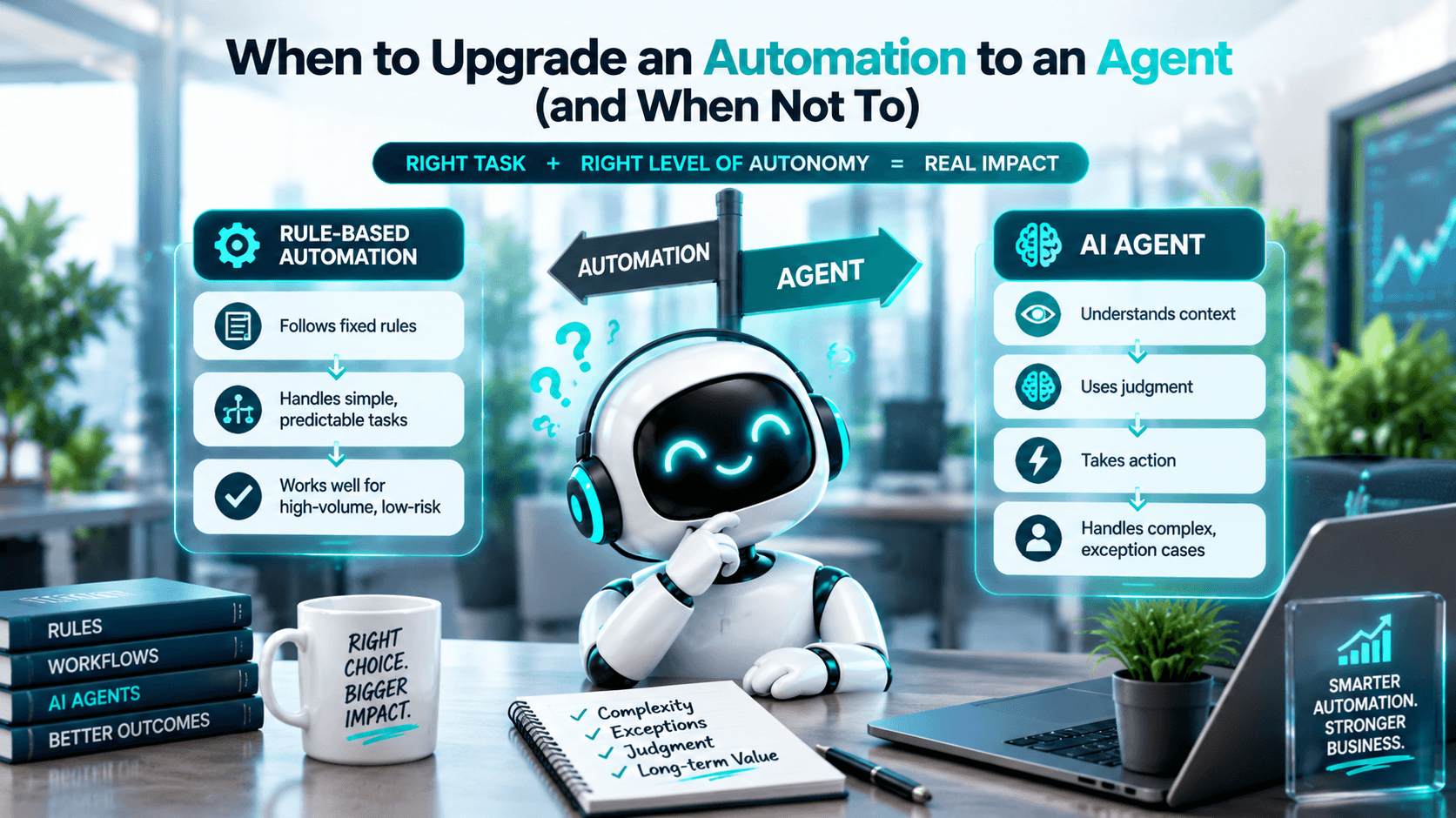
A scheduler follows the rules you set. An agent works toward the outcome you set. That's the real distinction, and it's worth being precise about it, since the two get marketed almost interchangeably.
You give a scheduler a queue and a time, and it fires on schedule. You give an agent a goal, get this webinar in front of the right people, and guardrails, stay on brand, don't repeat the same clip three times, and it plans the rest itself, the same purpose-built approach behind the custom AI agents we build at ZeluAI.
This isn't a fancier version of the same tool. It's a genuinely different kind of software making genuinely different kinds of decisions.
How Does an AI Agent Actually Decide Where Content Should Go?
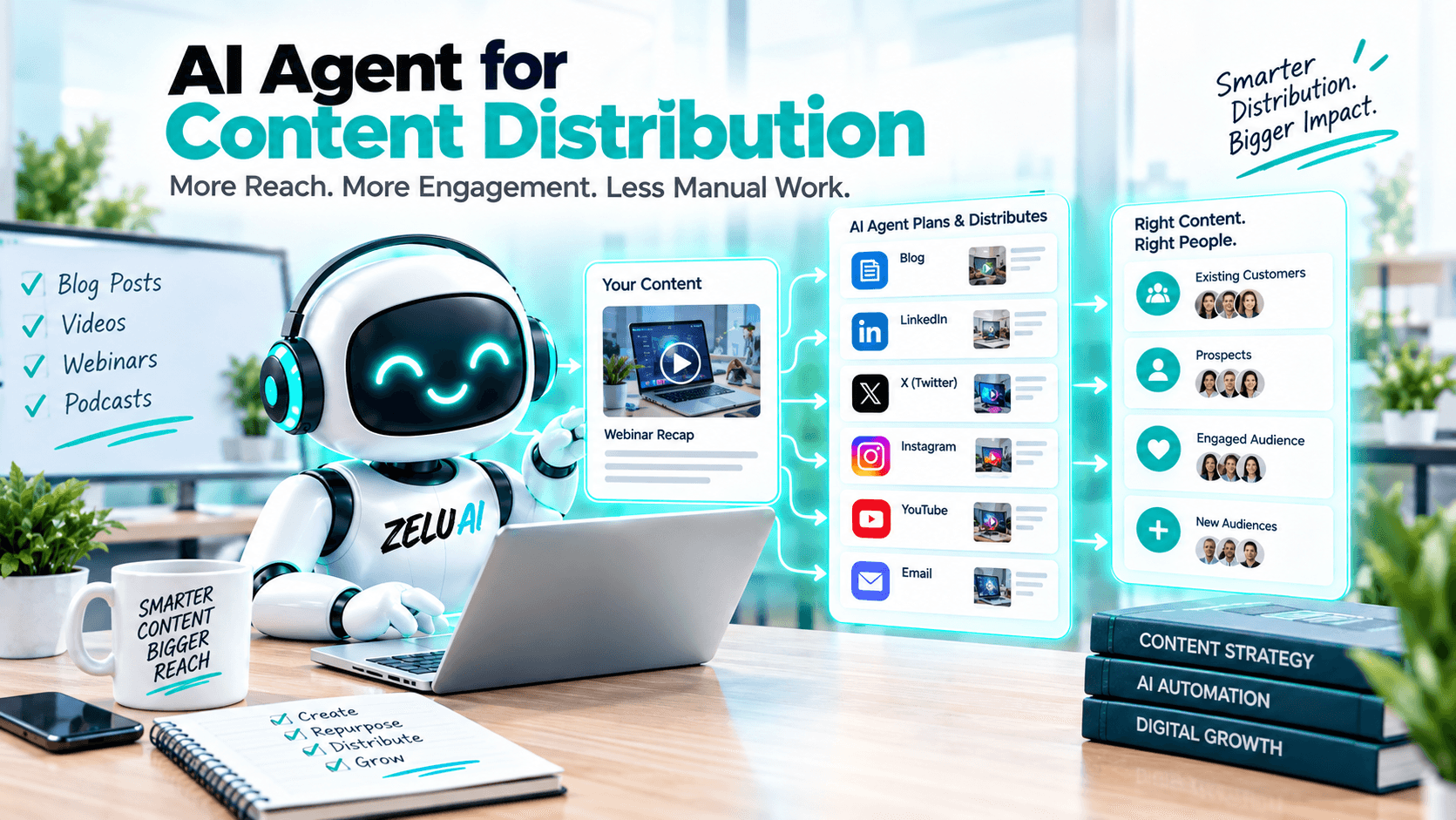
An AI agent starts by pulling in the content itself, along with brand guidelines, past performance data, and audience patterns, then works out the topic, tone, and who it's actually for. From there, it evaluates which channels and formats have historically performed best for that kind of content, rather than distributing everywhere identically and hoping something sticks.
Does It Actually Rewrite Content, or Just Resize It?
It rewrites, not resizes. Trimming a blog post into a shorter caption isn't the same as reinterpreting the core argument for how people actually read on a specific platform. A genuine agent reworks the message natively for each channel's tone and format, rather than mechanically cutting the same sentences shorter.
How Does It Personalize the Same Content for Different Audiences?
The same source material can produce meaningfully different outputs depending on who's receiving it. A launch announcement built for a business's most engaged, longtime customers doesn't need to read the same way as one built for someone who hasn't opened an email in months, even though both come from the same original piece.
An agent handles that segmentation using engagement history, building versions suited to each group rather than sending one generic message to everyone at once.
Can It Help Content Get Found by AI Answer Engines, Not Just People?
Increasingly, yes, and this is the part most conversations about content distribution still miss entirely. Search and answer systems now evaluate content on signals like freshness, engagement patterns, and how consistently a source gets cited elsewhere, not just whether a human happened to click on it.
This is the same underlying shift we cover in AI shopping agents, where being genuinely legible to an AI system, not just a person, increasingly determines whether something gets surfaced at all.
Content built and distributed with this in mind has a real chance of being picked up and referenced by these systems directly, not just by a person scrolling past it in a feed.
What Can't an AI Agent Do Yet?
This deserves an honest answer. An AI agent handles the distribution mechanics well, deciding where content goes, reshaping it for each channel, adjusting based on performance, but it doesn't replace the judgment behind whether a message is actually right for a brand, a moment, or a specific audience's mood at a specific time.
Genuinely creative reframing, the kind that reinvents how an idea gets told rather than just where it gets posted, still benefits from a person's instinct. And anything touching a sensitive or crisis-adjacent moment needs a human making that call directly, not a system executing a distribution plan it built before the situation changed.
How Does It Connect to the Tools a Business Already Uses?
For this to genuinely save time, it needs to work with the content management system, CRM, and scheduling tools a business already relies on, rather than becoming a separate system someone has to manage alongside everything else.
A well-built agent pulls brand guidelines and approved assets directly from where they already live, and pushes finished distribution plans back into existing workflows instead of creating a parallel one.
How Should a Business Get Started?
The clearest starting point is picking one piece of content that clearly deserved more reach than it got, and letting an agent handle just its distribution and repurposing, rather than trying to automate an entire content pipeline at once. Proven reliability on one piece is a better foundation than broad, untested autonomy from day one. You can see the fuller range of what we build on our services page.
Final Thoughts
Good content going unseen usually isn't a creative problem, it's a distribution problem, and it's one most teams have simply accepted rather than solved. An AI agent genuinely changes that math, deciding where content goes and reshaping it for each channel far faster than a person reasonably could alone.
What it doesn't change is the judgment behind whether a message is right for a moment, a brand, or a specific audience's mood. Businesses that get real value here scope the agent's role honestly, letting it handle the mechanics while a person still owns the calls that genuinely need one.
Frequently Asked Questions
Can an AI agent for content distribution work with content it didn't help create?
Yes, the agent typically works with whatever source content it's given, regardless of who or what produced it originally.
Does it replace a content calendar, or work alongside one?
It works alongside one, informing what gets distributed and where, while a calendar still tracks the overall production schedule.
Can a business control which channels an agent is allowed to use?
Yes, channel access is typically defined upfront as part of the guardrails a business sets before the agent starts working.
Does distributing content this way require rebuilding a company's existing workflow?
Not usually, a well-built agent is designed to plug into existing tools rather than replace the workflow already in place.
Can an AI agent flag when a piece of content underperforms so a team can investigate why?
Yes, ongoing performance tracking is typically part of the same system, surfacing underperformance rather than letting it go unnoticed.